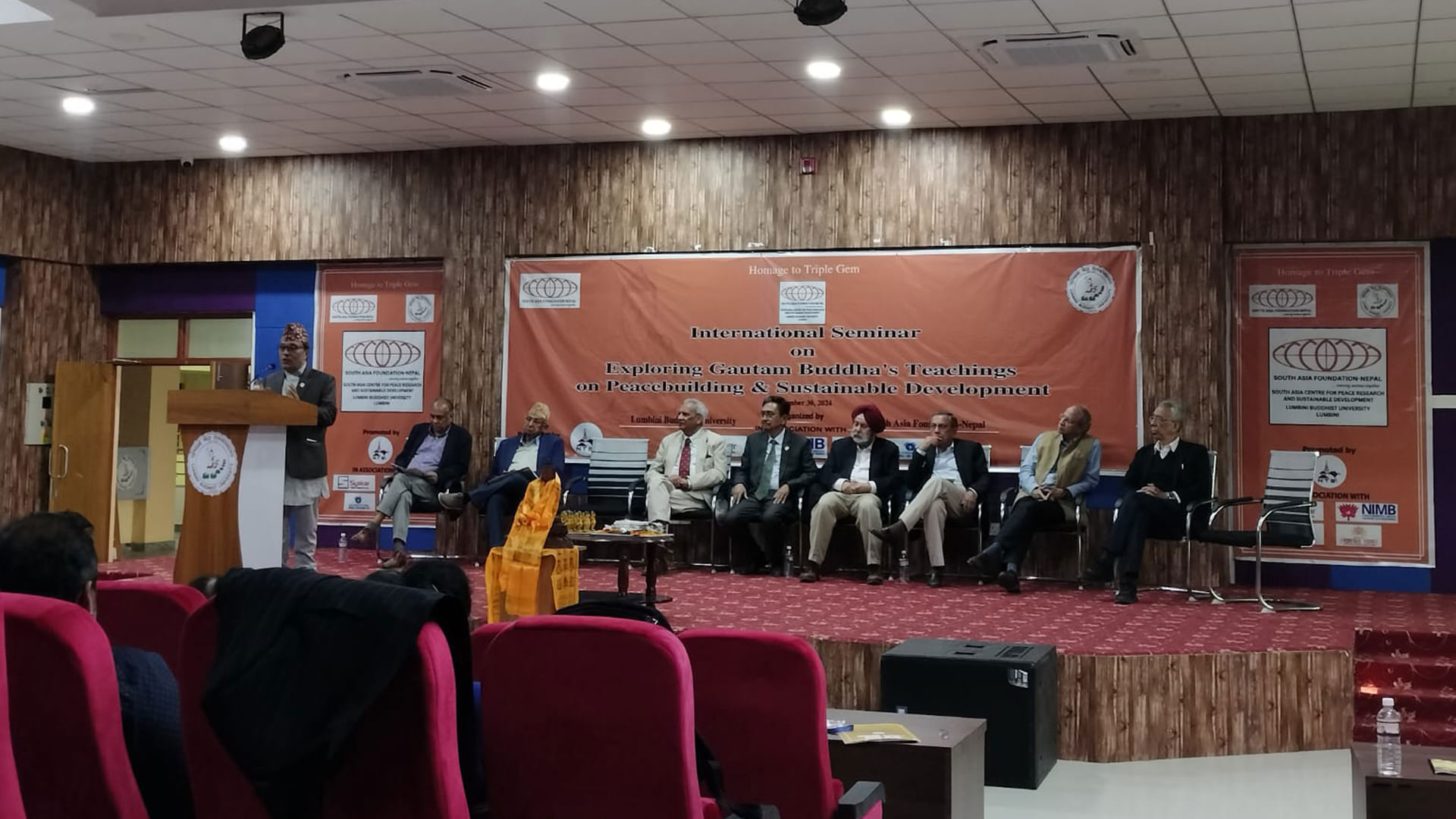
The South Asia Centre for Peace Research and Sustainable Development (SACPRSD), established by the South Asia Foundation-Nepal (SAF-Nepal), in collaboration with Lumbini Buddhist University (LBU), successfully convened an international seminar in Lumbini exploring the contemporary relevance of Gautama Buddha’s teachings for peace building and sustainable development.
Promoted by the Nepal Television Board (NTB), and supported by Nepal Investment Mega Bank (NIMB), Syakar, Nepal SBI, and CG Group, the event brought together academics, diplomats, policymakers, and peace practitioners to forge dialogue on peace, cooperation, and sustainable development.
Key Objectives
● Advance dedicated studies on peacebuilding and sustainable development.
● Conduct in-depth peace research exploring the contemporary relevance of Buddha’s teachings.
● Offer comprehensive academic programs in conflict management, peacebuilding, and entrepreneurship.
● Facilitate inclusive learning through regular online/offline classes and interactive workshops.
Seminar Highlights
Inaugural Session and Key Speakers
The seminar opened with a tribute to the Triple Gems and the recitation of the Five Precepts, led by Venerable Maitri Mahathera, followed by a warm welcome address from Mr. Rahul Barua, Honorary Secretary General of SAF-Nepal.
The inaugural keynote address was delivered by Prof. Priyankar Upadhyaya, UNESCO Chair Professor at the Malaviya Centre for Peace Research, Banaras Hindu University, who emphasized the universal applicability of Buddhist principles in addressing contemporary global challenges
Best wishes and remarks were shared by Sh. Padma Jyoti (Chairman, Board of Trustees, Madan Bhandari University), Mr. Udaya Bhattrai (Nepal Tourism Board), and several other distinguished academicians and diplomats.
The session concluded with an inspiring address by Prof. Dr. Triratna Manandhar, Former Vice Chancellor of LBU, and was presided over by Prof. Dr. Subarna Lal Bajracharya, Vice Chancellor of LBU.
The seminar included multiple panel discussions and sessions, each focusing on the relevance of Buddha’s teachings in contemporary society:
Session 1: Exploring Gautama Buddha’s Teachings for Peace Building and Sustainable Development
Chair: Amb. Jayant Prasad (Former Ambassador of India to Nepal and Afghanistan)
Co-Chair: Dr. Dilip Kumar Barua (Vice-Chancellor, Bangabandhu Sheikh Mujibur Rahman University, Bangladesh)
Key Speaker: His Eminence Shyalpa Tenzin Rinpoche (Head, Shyalpa Monastery)
The session explored the transformative potential of Buddha’s teachings in promoting harmony and sustainable practices globally.
Panel Discussion 1: Teaching and Researching Conflict Management, Peacebuilding, and Sustainability
Chair: Prof. Anjoo Sharan Upadhyaya (MIT World Peace University)
Speakers:
Discussions revolved around integrating Buddhist principles into academic frameworks for conflict resolution.
Panel Discussion 2: Conflict Management, Peacebuilding, and Diplomacy: Relevance of Buddha’s Teachings in Today’s World
Panelists:
Moderated by Dr. Manik Ratna Shakya (Dean, FBS, LBU), the panel highlighted how diplomacy could benefit from Buddhist principles of compassion and understanding.
Closing Session
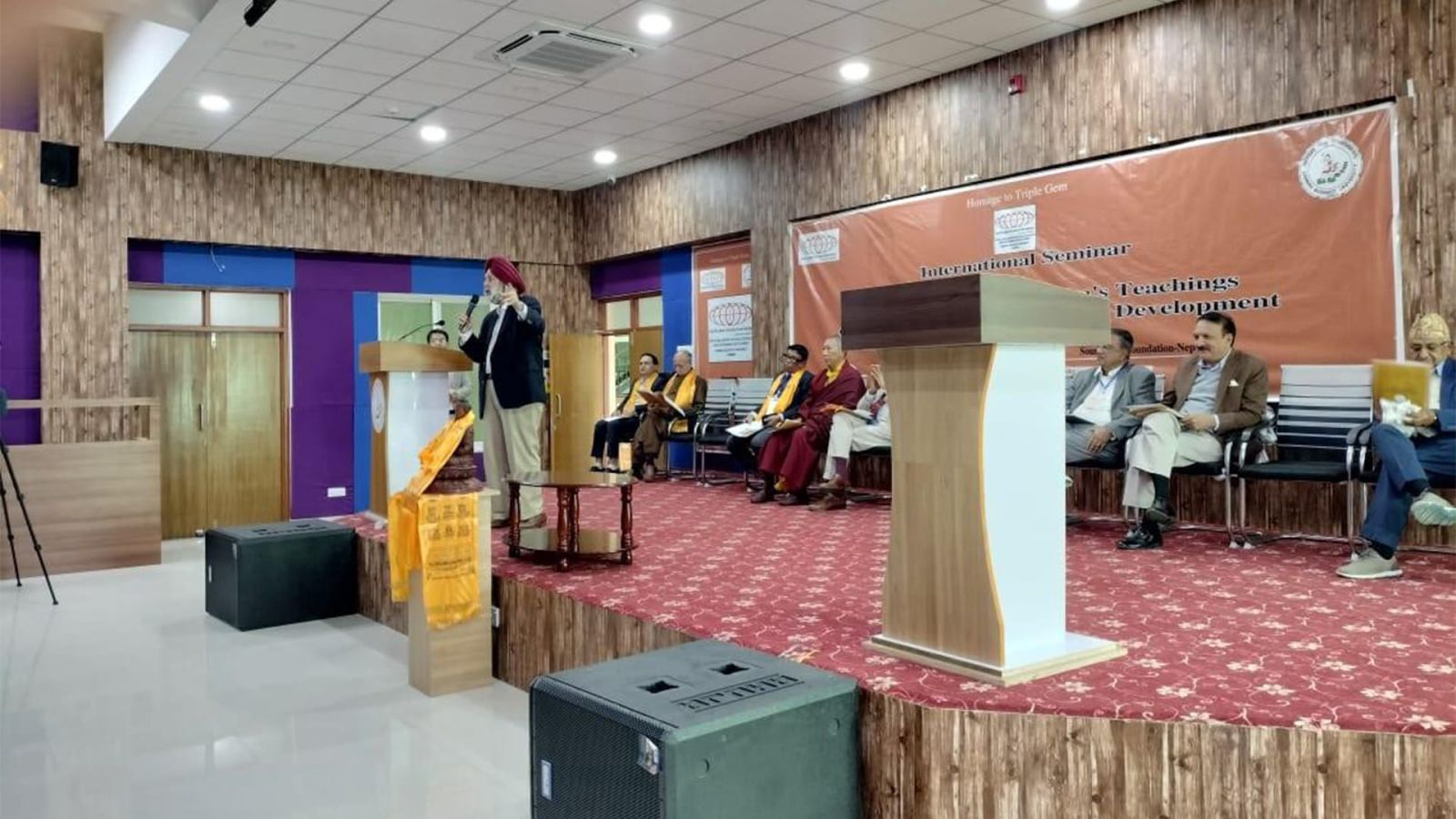
The deliberations concluded with a declaration of key outcomes and resolutions, eloquently delivered by Amb. Manjeev Singh Puri, Former Ambassador of India to Nepal.
The declaration highlighted the Centre’s vision to:
Conclusion
The one-day seminar provided a platform for scholars, diplomats, and policymakers to engage in discussions on the relevance of Buddha’s teachings in contemporary peacebuilding and sustainable development.
The event underscored Lumbini’s growing role as a global hub for peace research and education and reaffirmed the commitment of SAF-Nepal and LBU to advance policy dialogues, academic programs, and regional cooperation inspired by the timeless wisdom of Gautama Buddha.
.jpg)
Manjeev Singh Puri, declaring the academic programmes soon to be launched by SACPRSD
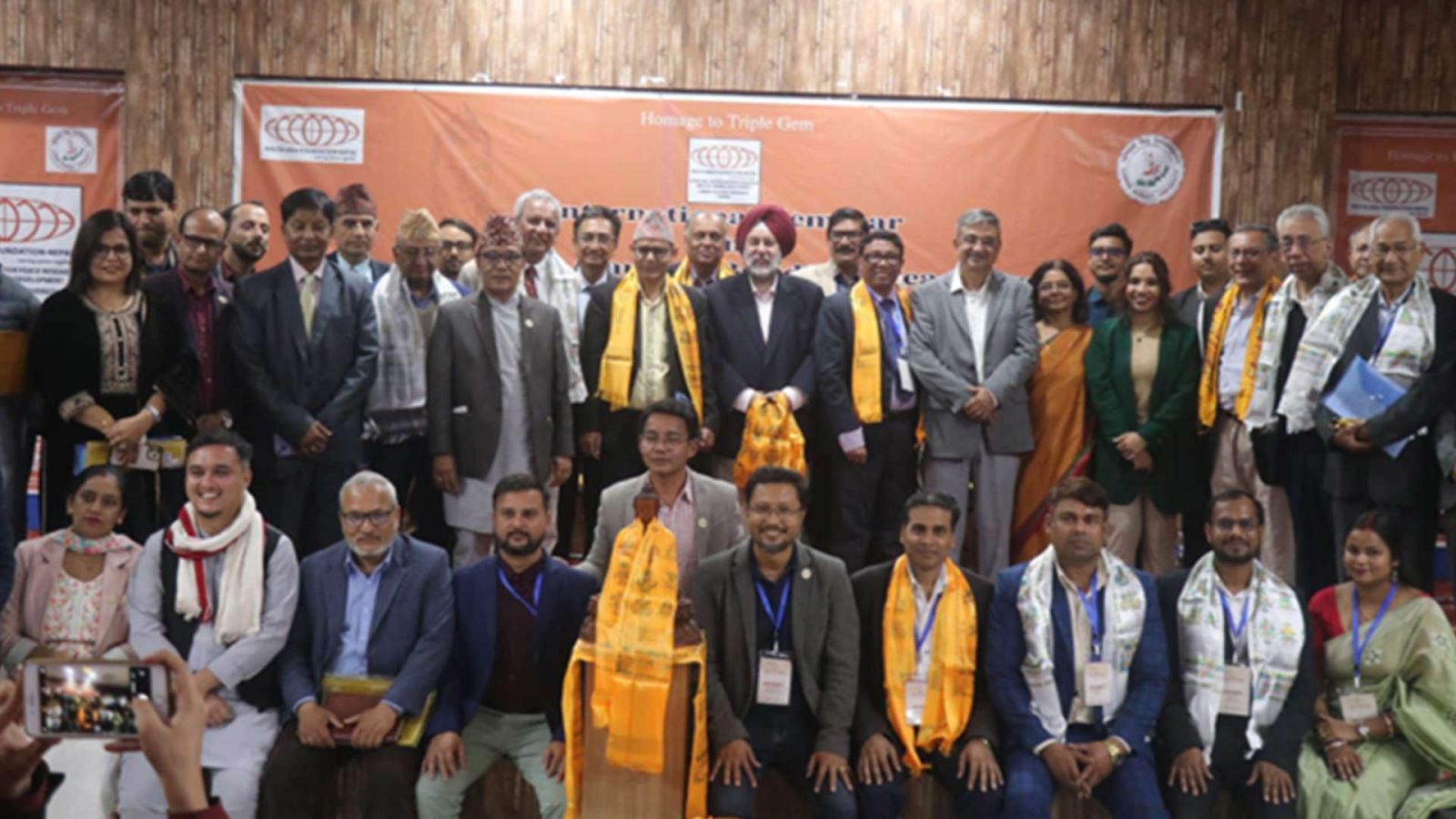
Group Photo after the Closing Session